
Fix the Route!A campaign to make the Lewes to Brighton stretch of the cycle route (C90) fit for purpose
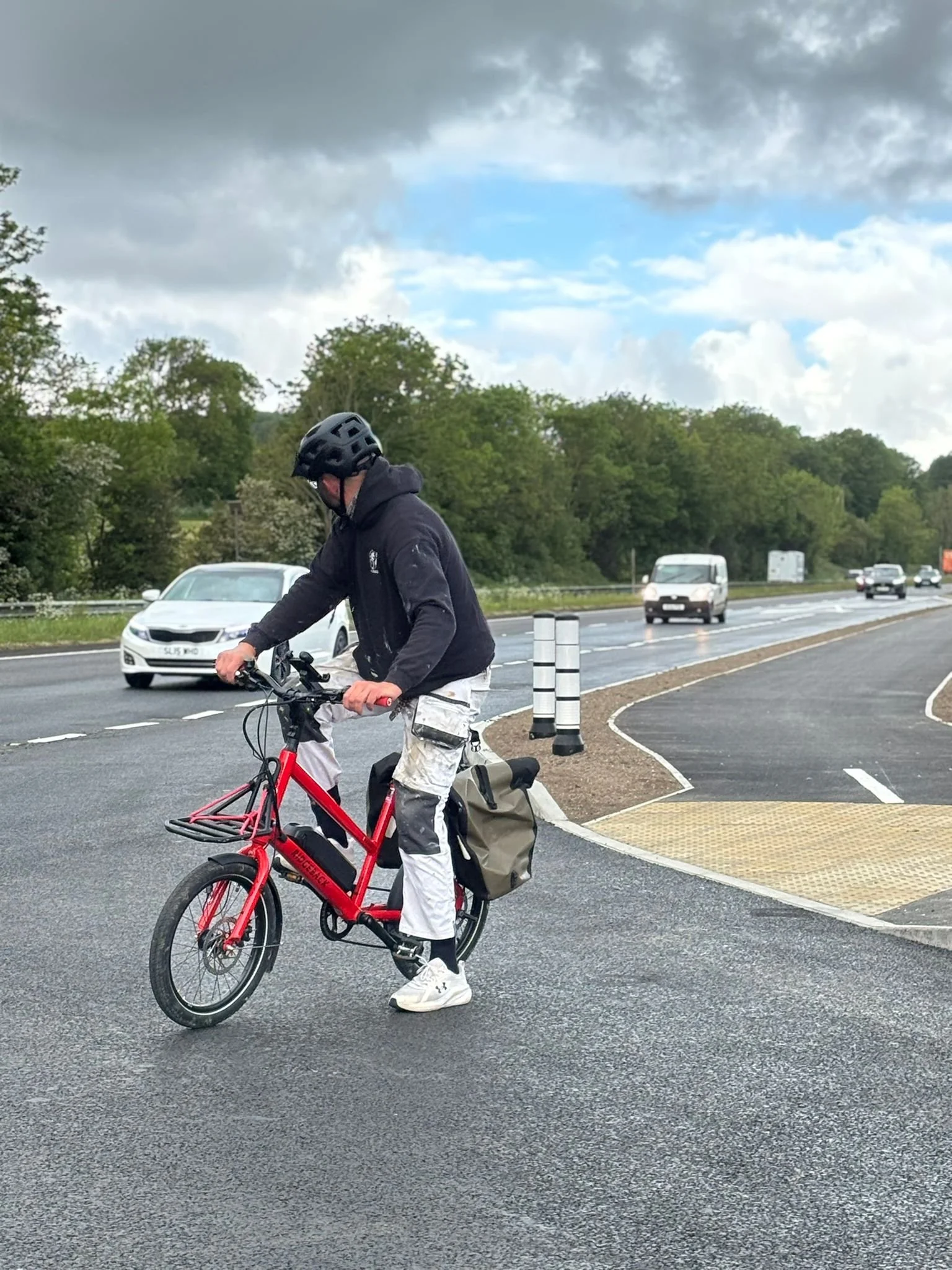
A cycle commuter crossing the petrol station slip road on the eastbound carriageway of the A27 which was realigned in May 2026. It would not have taken much thought and effort to redirect the path behind the petrol station and thus avoid these dangerous crossovers. Image credit: Sheila O Sullivan
Cycle Lewes and other like-minded organisations in Sussex, [1] are calling on National Highways to start taking public safety seriously. They want an urgent review of the state of Regional Cycle Route 90 from Brighton to Lewes, on the northern side of the A27, with a view to it being improved and properly maintained. They have launched a campaign ‘Fix the Route’ to highlight the issue and local MP James MacCleary, Liberal Democratic for Lewes is backing it.
“I have long been concerned about the safety of this vital [cycle]route along the A27 and the impact it has on local residents. National Highways must now take an urgent look at this stretch and produce a workable plan. With Parliament sitting again, I will be raising this with the Minister to push for real progress.”
The C90 forms part of an almost continuous near traffic-free route from Brighton seafront to Polegate and from there to Hailsham and Heathfield on the Cuckoo Trail. It is a heavily used cycle-commuter route, joining together the short distance between two major conurbations. En route it connects two universities, the Amex football stadium, Stanmer Park and the South Downs Way.
Between Brighton and Lewes the route is hard up against the 70mph carriageway over much of its length without any protection provided for people using it, making it unsafe and unpleasant. In stark contrast, work overseen by National Highways in May 2026 to alter the slip roads to the eastbound petrol station, where a new Greggs is to be built, has seen one lane of the A27 closed, a 40mph speed limit imposed, and huge barriers erected to protect workers.
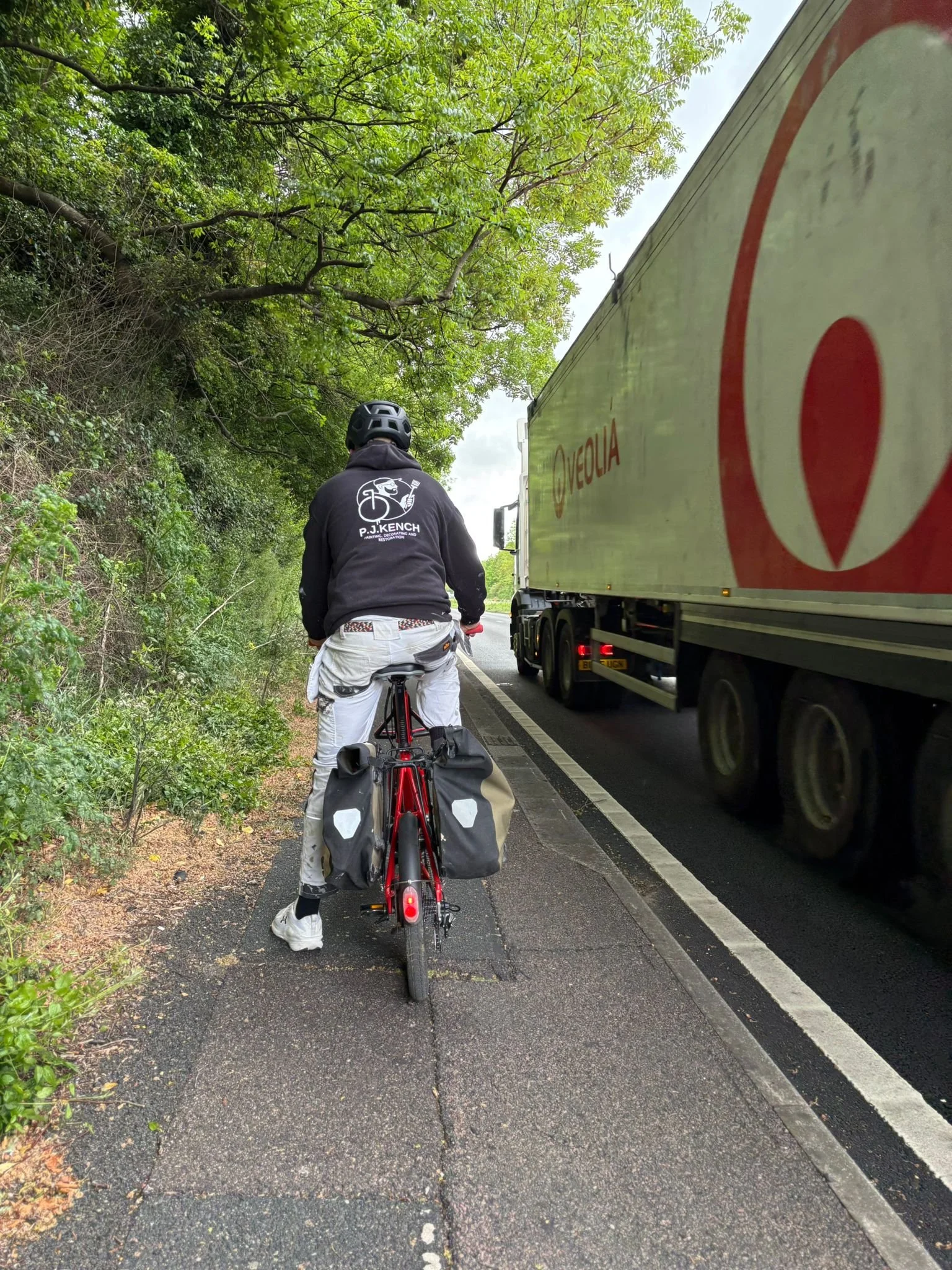
Cycle commuters regularly use the C90 between Falmer and Lewes. Yet it has no buffering for cyclists and pedestrians against the 70mph dual carriageway. Lack of maintenance on the paved surface and vegetation encroachment increase dangers for users of C90. For cyclists approaching each other at night, it is particularly challenging for westbound users who are blinded by traffic headlamps lights. The glare, in turn, makes it almost impossible to make out oncoming cyclists. Image credit: Sheila O Sullivan
The organisations also want the South Downs National Park Authority to learn lessons after it allowed the development to be approved without any real consideration of the cycle route, and for failing to challenge the inadequate transport assessment. While National Highways has secured some changes to the path, this has potentially wasted money as the path still doesn’t meet any recognisable, let alone modern-day, standards.